Quickening

Can the Dead write? (What) can the Undead write? What is the difference between Death and Hibernation? Between Panic and retreat? Rebirth and Entropy? Between Malice, Caprice, and Indifference?

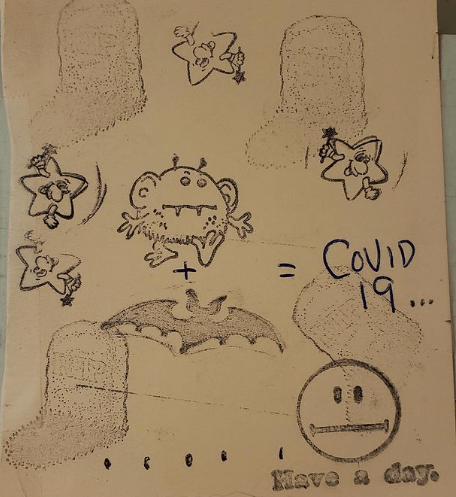
What landed us on the doorstep of March 2021 was all these things- Malice, Caprice, Indifference. We are the Dead, we are the not yet Dead, we are those who survive, we have turned (been turned) as in myth, to tree, to stone, by the caprice, or malice, or indifference of the gods

or of men

we will cry out, as Proust said, to the passerby to recognize us for what we are, to somehow see the homeless soul in the simple object that persists and recurs season by season. I was a man, now I am an apple blossom. I was a woman, now a paving stone.

James said, like Piranesi in Susanna Clarke’s book of the same name, he went into the Labyrinth and is not the self he was. Someone used to live in that apartment on Ashby Avenue

a poet, a musician, he played a guitar, many loved him, many remember, and someone who resembles him is here, but he, the one they remember, he is long gone. Into the Labyrinth. He likely won’t return.

Oh my friends I haven’t spoken

I haven’t heard my own voice, really, for months. Something about the clay between your teeth, reverberations of the deafening quiet those first weeks a year ago driving up the Berkeley slope to the grocery store, my 40 year old Mercedes whapping like a chopper and not one solitary other car on the street, and KQED a continual narrative, increasingly terrifying, about transmission, cases rising in various places, community spread, lack of PPE, ventilators, The malicious, capricious, indifferent president saying it would go away like a miracle. I even wanted to believe him, but couldn’t muster the willful ignorance to do it. I will always remember Nancy Messonier’s press conference in late March when she said she had warned her kids that this would signifigantly disrupt their lives, and the cruise ship with hundreds infected docked at the port of Oakland after being routed away from the more prosperous and white port of San Francisco.

On those drives it took me less than 5 minutes to cross the whole town, and like Harley said, it seems like theres more crazy people because nobody walking on the sidewalk but them. The Silence outside the car pressed on the windows like Sirocco fog. It reminded me of Don Delillo’s White Noise- the airborne toxic event. A silence like that swallows the future. In the afternoon my daughter would be crying in the garden, and the playgrounds were bound like bodies- killed or hostage?- in yellow tape. That was months before the fires.

that was a year ago, almost exactly.

weathering

Planning for winter storms
in the first week of September.
it will rain, and the wind will come in, furious
from the open ocean
rattling my home
before it runs into the hills
to hide its face.
Burgers watches as I pull old nails
hammer in new nails, shift the hanging
clay pot of sweet basil (flowering, going to seed)
to face North, not West,
move the Thai basil (tiny purple leaves, brittle twiggy stem)
to the stairs beside the lemon tree, dill, and fruitless strawberry
then she closes her yellowgreen eyes to doze
in the dirt beneath the one small, slowly ripening tomato
that emerged from the shady cave of the porch this summer.
Weird summer, summer of fires in forest
and suburb, tear gas hanging over the cities
summer of (Home Depot tiki) torches aloft,
vehicular homicide, and the open stating of allegiances to Devils
naiively assumed, in many blinkered quarters, to be extinct.
Now comes the Fall of hurricanes and floods
of rot and rubble.
in the wake of isolated and celebrated examples
of survival
of countless refusals to connect the dots, to repudiate
ill-begotten theories of coincidence, synchronicity
accident or innocence
it will be claimed that benevolence is a noun, and not a verb.
So I’m shifting everything around.
the Rosemary fell from a ledge, and I righted it.
The jade holds our instruments upright-
guitar, banjo, ukelele-
but can’t keep them in tune.
In the months ahead,
Whiteness willing
we’ll still be here, but under blankets
refusing the full shelter of the indoors
singing loud and drunkenly.
our imperfect harmonies
will contest the wind.
*
*
*
*
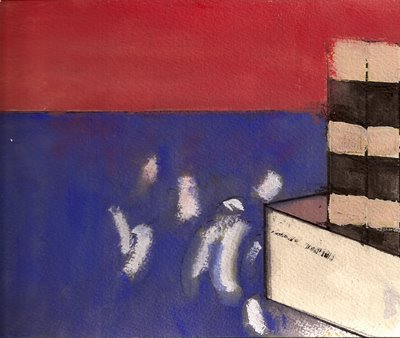
*painting by Liam Golden www.liamgolden.com

Cheat Lake ’93

The plastic basins sit in the sink. I would say « kitchen sink » but there is only one sink, spring-fed, in the cabin my father and uncle built with their friends on the first backwater of the Cheat Lake in West Virginia almost 50 years ago. The basins are now used to soak crusted egg off the white plastic plates with their pea green and yellow floral design. The plates, like the colored glass lamp hanging over the table and the embroidery of mushrooms on the wall, are relics of 70’s beer and cigarette bacchanals, before us kids, when the place was still called « Mecca South ».

The basins, however, date from the early 90’s, and before they were used to soak breakfast dishes they were used to collect my father’s excess bodily fluids, mostly bloody phlegm, as I recall, brought up by long bouts of a painful, hacking cough.

They came from Ruby Memorial Hospital, and are still, 24 years later, the easily identifiable (at least to anyone who has spent a lot of time in hospitals) hospital pink that they were in 1993. My memory of my father’s facial features has faded more- much more- than the color of these plastic basins.

The pink is very tasteful, actually, which surprises me when I go back to the family place once every year or two and re-discover them. One of my aunts built a house on the property and lives there year-round now, and the past few years my cousins have been bringing their small children for impromptu family reunions. I always find the basins still here and notice again that the pink is not a bubble-gum pepto-bismol pink but rather a dusky, purplish-pink, somewhere between blush and bruise.

That summer, the summer of ’93, my father was hospitalized for a month (or a little more? or a little less?) with a septic knee infection (I think this is what it was? All I really knew at the time was that the knee was the size of a grapefruit, and it was very serious). My older brother was in Mexico visiting Aunt Julie and Tio José, and my mother, panicked and doing a less expert job of hiding it than she generally did, mostly stayed at the hospital. That left me largely at the cabin with a dumb Brittany Spaniel named Calvin and a field mouse-obsessed orange tabby tomcat named Popcorn, listening to the same mixtape cassette (Duran Duran, U2, SWV), or top 40 country music on the radio, eating toasted and buttered english muffins when I got hungry.  I also learned how to meditate by following the instructions in a worn paperback called « Yoga Meditation »  which I had purchased at the used bookstore in Morgantown. The cover had a photo of a lady in a white leotard with long blonde hair sitting in lotus position with a tall candlestick burning in front of her.

I would walk the narrow path hacked into a ridge of the steep hillside, following the shoreline of the backwater below, until I got to what I had designated as my meditation spot; a boulder protruding out over the long drop to the lake, with a small, quiet stream running beside it. I would sit cross-legged, close my eyes most (but not all) of the way, count and concentrate on my in-breaths and out-breaths, and try to notice my thoughts as they came up and dismiss them, like blowing a soap bubble out towards the lake, watching it drift and pop. My favorite type of meditation was 360 degree listening meditation. I focused on individual sounds, and then gradually learned to notice them together, to be aware of the spontaneous symphonic qualities of sound. The stream running close by on my left, stillness as it fell over the ledge and the splash on the rocks below as it continued on it’s way down to the lake. Wind in the thick,  bright green foliage all around me. A cricket somewhere behind me. a distant jet-ski’s roar and stop. An outboard motor idling as someone pulled into a shady fishing cove on the opposite bank. loud laughter from the Graziani’s dock, echoing over the backwater. The hum of a plane overhead. By the time I was back at the cabin, changed into my bathing suit, and wading, then diving into the cool, sun-dazzled green water of Cheat Lake, my mind was often nearly empty. It may not be an accurate recollection, but I do not recall feeling lonely or scared.

At some point, after maybe two weeks or so, Grandma came down from Pittsburgh to stay at the cabin with me. She brought white bread, chipped ham, mayo and iceburg lettuce. She brought milk and Frosted Flakes. She brought a semblance of normalcy, and a flurry of activity. To every day, it’s project. We hiked up to the bright, sunny pastures at the top of the property to pick blackberries. Grandma with a kerchief tied over her silver hair. We tried our hand at fishing from the dock. We collected firewood. We built a « handicapped ramp » up to the front porch of the cabin out of clay that I dug out of the lake by the bucketful and large flat stones that I dug up all up and down the shoreline, and hauled up the path in a little red Flyer wagon. Grandma explained that the ramp was because my father was going to get out of the hospital and come back here, but would have no flexibility in the knee, and would certainly be using a walker or a cane, if not a wheelchair. I see now that my grandmother conceived of this project as a way of occupying my time and distracting me, as a way of giving me some structure (little did she know I had done fine without it), and to give me Optimism writ large, as a concrete thing I could feel and hold, even build myself, one stone, one handful of wet clay at a time.

Optimism was sort of a moot point for me, though. It really did not seem conceivable to me that my father would die. When I was near him I was enormously, inarticulately concerned with his suffering. I felt his suffering physically, in my own knobby, twiggy wisp of an almost-pubescent body. But at that time his death, his inevitable death, for a full-blown AIDS patient in 1993 had virtually no hope of survival, simply was not real to me. His death belonged to the realm of impossible- I should say impermissible– things, and so did not concern and pre-occupy me as it has off and on in all the years since it did occur.

When Grandma drove down to West Virginia from Pittsburgh and hiked in to the cabin with groceries, straining to haul her petite body over fallen trees that blocked the path, she may have brought, tucked in with the groceries, a fashion magazine. I can’t remember, but it strikes me as likely, because both my mother and my grandmother bought me fashion magazines as a form of reward or comfort. My mother always gave me the hulking behemoth September issue of Harper’s Bazaar. Grandma may have brought me the July, or the new August Vogue.

Decades later, it is with the eyes of an aesthete, a now confirmed devotée of Fashion (studied at Parsons, apprenticed to a bespoke tailor, etcetera), as well as for many years a practicing visual artist (Junior year of college painting in a Paris Atelier, etcetera) that I see the darkish pink of these hospital spittoons in the sink. I think, « I would like a linen dress in that color. A cashmere tunic with big pockets and a scoop neck. Silk lounge pants. Suede high-top sneakers. »

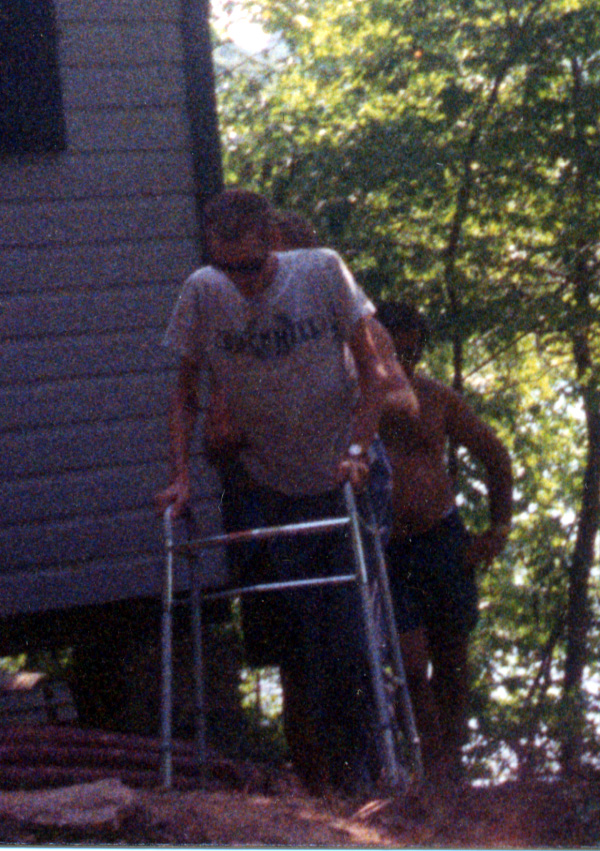
I am well aware of what they are and how they came to be here. He did insist on leaving the hospital, despite the doctor’s warnings that it would kill him. As my mother never tires of reminding me, I get my stubborn, bullheaded streak, as well as my temper, from him. My father came back to the cabin on an old pontoon boat, ferried in by loyal, deeply good, gutter-talking, chain-smoking, large, loud-laughing mountain neighbors who had known him since he was a child and loved him. He used the ramp that Grandma and I had built. He was not well and I distinctly remember him, after having insisted on going out sailing and getting caught in a storm (that stubborn streak again- Death be not proud!), lying on the sofa under an electric blanket and a couple other blankets, shivering, irritable. I lay down beside him, put my arm and leg over him, and lay my head on his bony, caved-in chest, determined to give him whatever warmth I had.

We returned to Boston when the scent of Fall was on the air, just in time for the start of school. He survived for almost two more years after that summer; an incredible feat considering that he had no functioning immune system of his own at that point, only a sister who was a blood match, and who was willing to have white blood cells sucked out of her body and pumped into his body to buy him a little more time.

Sometimes I think any normal family would get rid of those pink plastic basins. But then I realize that « normal » doesn’t mean anything. There is no « normal family », just as there is no « normal person », no « normal life ».
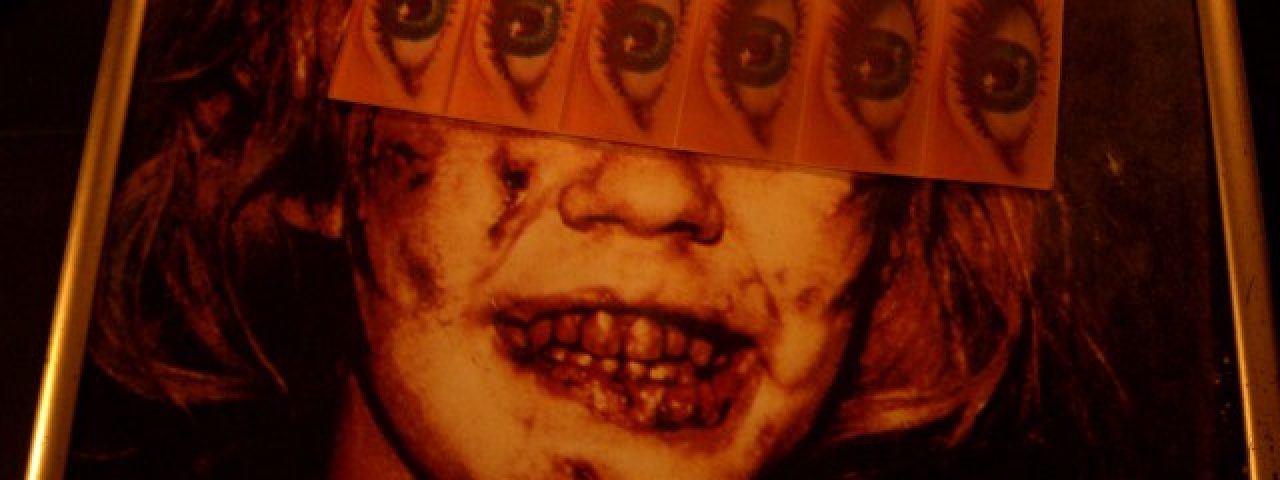


The Ballad of Seamus and River

In the crumbling East Oakland public schools he attended as a child, Seamus had been a pariah. He was invariably the only white kid in his class. He had never learned proper hygiene from his depressive unkempt mother or his mostly-absentee drunk father. He was not funny, or smart, or in any way talented. If you had been standing on the corner back in ’96 as Seamus walked by, slump-shouldered, his pimply face with the too-long jaw lowered so as not to make eye contact, you probably would have heard someone say “Stupid retard”, someone answer “Man, that’s just sad”, and someone else laugh.
One day when he was 15, Seamus stood for about five minutes looking at a bottle his father had left on the coffee-table, looking at the overflowing ashtray beside it, hearing police sirens wailing, looking at the T.V where the A’s were down three in the 8th inning. Then he picked up the bottle and got his first taste of whiskey. The burn travelling down his throat and into his gut was almost the only pleasure and was the only relief he had ever felt.
Seamus stopped going to school. His mother kicked him out saying he was a piece of shit like his dad. Four years after that, he had become a fixture on Telegraph Avenue. He sat alone, cross-legged on a ragged blanket in front of Amoeba Records, a crumpled paper cup before him, a water bottle full of cheap vodka beside him, his forearms crossed over his belly, rocking slowly forwards and back, occasionally mumbling “spare change”. He wore dirt-encrusted blue jeans and a ragged army-surplus jacket. His dull brown hair was long and hung down over his downcast eyes, and his beard was long and scraggly. The tight community of street people avoided him.
It was a bright, clear September day when a young traveler came striding, long-legged and curiously peering up and around him through his brown eyes, down Telegraph. He had a pack on his back with a bedroll, and carried a cheap, battered little guitar, on the body of which someone he had written with a sharpie, in unself-conscious imitation of Woody Guthrie, “this machine kills fascists”. He sat down beside Seamus. “Hey, man”, he said, “I’m River. What’s your name?”
On the day they met, River had just gotten a ride over the bridge from San Francisco, where he had been sleeping in Golden Gate Park with some meth-heads who he said were too negative for him. He said he grew up in New Jersey. He got hooked on heroin when he was a teenager, and his mom had sent him to Washington State to stay with his dad, who she hoped would beat some sense into him. Instead, they started doing heroin together, which was great, because his dad was a former army medic, and could always find a vein. Eventually, River had hopped a freight to Portland. He was pretty sure it was there, sharing needles with hobo kids in the train-yard, that he’d been infected with HIV. He didn’t figure it out until months later, when he got a cold and instead of getting better he began to waste away, so he went to the E.R. They told him he had AIDS. After he found out his status, he couldn’t see any of the people he’d been hanging out with in Portland without wondering if they had infected him, or if he had infected them, so he came south, thinking it would be warmer in the Bay, easier to stay healthy. At first it was. Through September and October River went to the methadone clinic, he and Seamus spare-changed and often got enough for Chinese food or pizza, and they slept up on a hill above campus where nobody bothered them and they could look out at the twinkling East Bay and San Francisco and the Golden Gate beyond. One warm night as they lay there just a little bit drunk gazing out on the constellations of streetlights down in the flats River said, “Hey man, Isn’t this amazing? Aren’t we lucky? We’re the kings of all this.”
But then, after almost five years of drought, the sky opened and day after day and night after night of freezing cold rain came down. The blanket and the sleeping bag and all their clothes were soaked. There was almost no foot traffic on Telegraph, and after buying vodka at 7-11 there was no money left over for food. There was no shelter on the hill, so they stayed, huddled together and constantly drunk, under the awning on the sidewalk. River started to get sick. At first he had a little wheezing cough. Then as the rain continued, He coughed harder. Fever set in. He lost weight so quickly it would have alarmed Seamus if he’d been sober. Then one day Seamus woke to see his friend’s face a whitish-blue beside him, and if River hadn’t been shaking so hard, Seamus would have thought he was dead. He didn’t know what to do, so he lay on top of River to try to warm him up. He lay his head on River’s chest, heard his heart beating faintly.
A girl on her way to work at the herbal apothecary saw them, and noting the blue tint of River’s face, decided to call 911. The ambulance arrived and several uniformed, efficient EMTs jumped out. They pulled Seamus off of River, whose unconscious body they lifted and strapped to a stretcher. As they loaded River into the ambulance, Seamus sat cross-legged, rocking himself, eyes downcast. A ponytailed, scrubbed-clean female EMT bent from the waist, and barely heard Seamus mumble, “That’s my best friend, man. He’s dying.”
“What’s his name? He doesn’t have any I.D on him”
“River.”
“Is River his legal name? What’s his last name?”
Seamus seemed to shut off, drift away. The woman seemed impatient.
“I don’t know”, he mumbled at the ground, finally.
The ponytail straightened up, and scoffed to a male EMT who had joined her,
“That’s his best friend he says, but he doesn’t even know his name.”